2026.08.18
5 hidden logistics costs weighing down your invoices (and how to avoid them)
Read more


Afin de calculer le poids volumétrique de votre pièce, entrez les trois dimensions. Le poids facturé sera le plus élevé entre le poids brut et le poids volumétrique.
Enter your tracking number
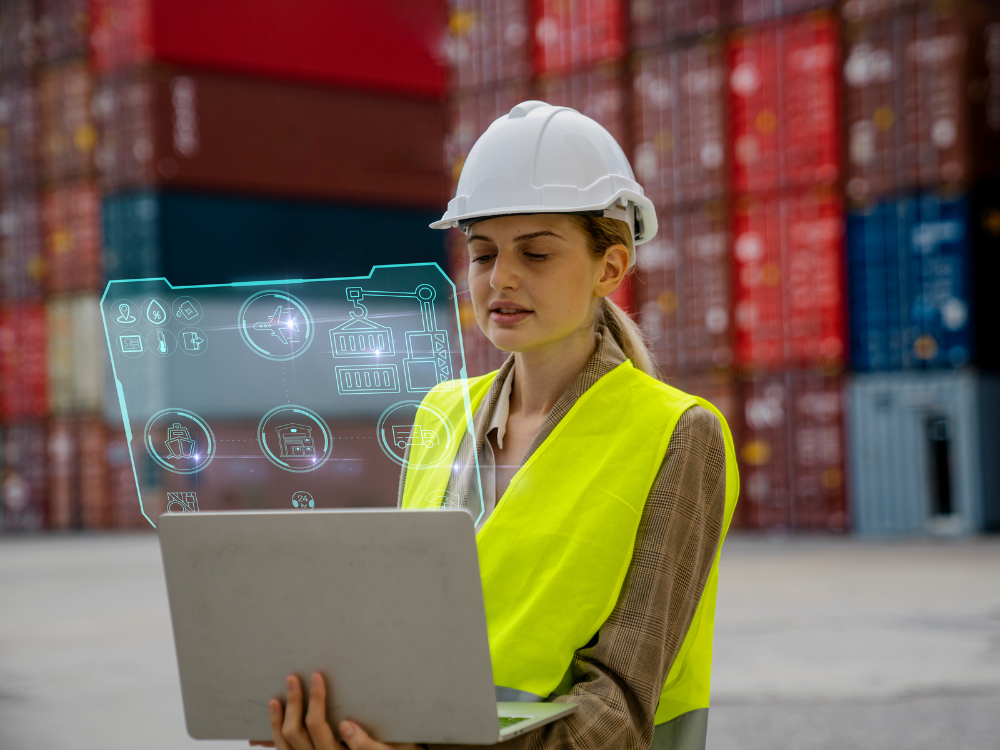
Artificial intelligence in logistics is progressively transforming every sector of the economy, and transportation is no exception. Long associated with science fiction, AI is now a concrete tool used to analyze massive volumes of data. Indeed, it helps businesses optimize transport operations, improve forecasting, and support decision-making.
Driven by the explosion of e-commerce, companies are constantly searching for ways to boost efficiency. Rising transport costs, severe labor shortages, and high consumer expectations add to this pressure. Consequently, artificial intelligence has emerged as one of the most promising solutions to meet these modern challenges.
But concretely, how is AI transforming logistics? What are its benefits, its limitations, and its potential for the coming years?
Every day, millions of data points are generated across supply chains. These include vehicle GPS positions, weather conditions, shipping volumes, inventory levels, delivery times, customs data, and consumer habits.
For a human being, analyzing this massive volume of information in real time is virtually impossible. Therefore, artificial intelligence processes this big data at high speeds. This technology allows companies to identify trends, forecast future events, and recommend the best operational decisions. Ultimately, it has become an indispensable tool for steering an increasingly complex environment.
Transportation is one of the areas where artificial intelligence is already demonstrating its most concrete potential.
Route Optimization
One of the most widespread uses of AI is optimizing delivery routes.
However, a traditional GPS suggests a route based mainly on distance or current travel time. In contrast, AI-driven systems simultaneously analyze multiple real-time variables:
Thus, this advanced capability allows systems to recommend more efficient routes and mitigate potential delays.
Delivery Time Forecasting
Consumers want to know exactly when their orders will arrive. Thanks to machine learning, companies can now predict delivery windows with much higher accuracy than before.
Specifically, these systems analyze past performance and current conditions to calculate dynamic estimates that update throughout the transit.
The last mile is a major financial challenge. According to several industry studies, this final phase alone accounts for up to 50% of the total shipping costs in a supply chain. Artificial intelligence plays a growing role in improving this critical phase through three major levers:
Logistics is not limited to transportation. Distribution centers and warehouses also benefit from numerous AI applications designed to maximize operational efficiency.
Slotting and inventory optimization
Algorithms analyze ordering patterns to recommend the optimal placement of products inside the warehouse. For instance, high-demand items can be placed in the most accessible zones. This practice drastically reduces picker travel times.
Demand forecasting and stock management
One of the greatest challenges in logistics is anticipating future needs. Thanks to predictive analytics, businesses can now easily manage their inventory. In fact, they can:
Document automation
AI technologies can automatically extract key data from complex documents like invoices, customs paperwork, and purchase orders. This automation effectively reduces human error and accelerates administrative processing.
Furthermore, beyond traditional Optical Character Recognition (OCR), the rise of generative AI and Large Language Models (LLMs) allows for intelligent context analysis. These modern systems can automatically sort customer emails or interpret complex transport disputes without human intervention.
Modern supply chains have become extremely intricate. A single product can cross several countries before reaching its final destination. Artificial intelligence helps companies navigate this complexity, particularly through proactive risk management.
AI systems can identify potential disruptions before they even impact operations. To achieve this, they continuously analyze external factors such as:
This increased visibility allows companies to react faster. In addition, they can easily compare different logistics scenarios to identify the most cost-effective alternative options.
Environmental pressure and strict regulations are pushing the transport industry to reduce its carbon footprint. Artificial intelligence is a major lever in achieving this green transition.
By optimizing routes, loads, and schedules, companies mechanically reduce unnecessary mileage. Smart systems allow for better capacity planning and improve the fill rate of vehicles. Finally, businesses can use AI to analyze their end-to-end operations and accurately pinpoint sources of energy waste.
Despite its impressive potential, artificial intelligence is not a silver bullet and comes with significant challenges.
First, its efficiency heavily relies on data quality. Consequently, incomplete, inaccurate, or outdated data can lead to poor automated decisions and paralyze a supply chain.
Furthermore, certain aspects of logistics still rely strictly on human expertise:
Technology continues to advance rapidly. Soon, it will completely redefine industry standards:
In conclusion, artificial intelligence does not emerge as a replacement but as the catalyst for an agile and eco-responsible ecosystem. Ultimately, companies that successfully orchestrate this alliance between algorithmic precision and human critical thinking will be the ones setting tomorrow’s standards.
What is artificial intelligence in logistics?
It is the use of advanced algorithms and machine learning models capable of analyzing complex data to optimize transport, warehousing, and global supply chain management.
How does AI concretely improve deliveries?
It optimizes routes in real time, accurately forecasts delivery windows, reduces logistical delays, and provides total visibility over shipments, particularly during the last mile.
Will AI replace carriers and human workers?
No. Human expertise remains essential. Artificial intelligence primarily serves as a co-pilot to assist logistics teams, automate repetitive tasks, and improve decision-making efficiency.
What are the main benefits of AI in logistics?
Key benefits include cost reduction, improved delivery times, better demand forecasting, resource optimization, a lower environmental footprint, and enhanced customer experience.
Why is AI important for the future of logistics?
Because it allows companies to manage increasingly massive volumes of data and improve decision-making within an ever more complex logistics environment.
2026.08.18

2026.07.31

2026.07.09